

Anyone else tired of hearing the word "AI" every five seconds? We see it in our emails, our search engines, and even our photo editors.
While bolting AI clumsily on to just about every product has led to AI-fatigue if not hostile rebellion, when you dig deeper, there's actually some surprising and meaningful ways it's being used.
Canadians should be proud of our place in the world of tech.
In addition to a Canadian creating key DNA for the Cloud 20 years ago (which is the only reason we've made the AI leaps of today) there are incredible Canadian companies using artificial intelligence to solve real-world problems that have nothing to do with writing your next essay, adding a silly filter to your video call, or offering you pointless suggestions for cleaning up your inbox.
From the front lines of wildfire fighting to the three-point line of a basketball court, AI is doing some heavy lifting in the Great White North.

Don't believe me? Allow me to show you three Canadian innovators that are using AI in ways that might actually surprise you!
1. Voxelis: The AI Firefighter in the Sky
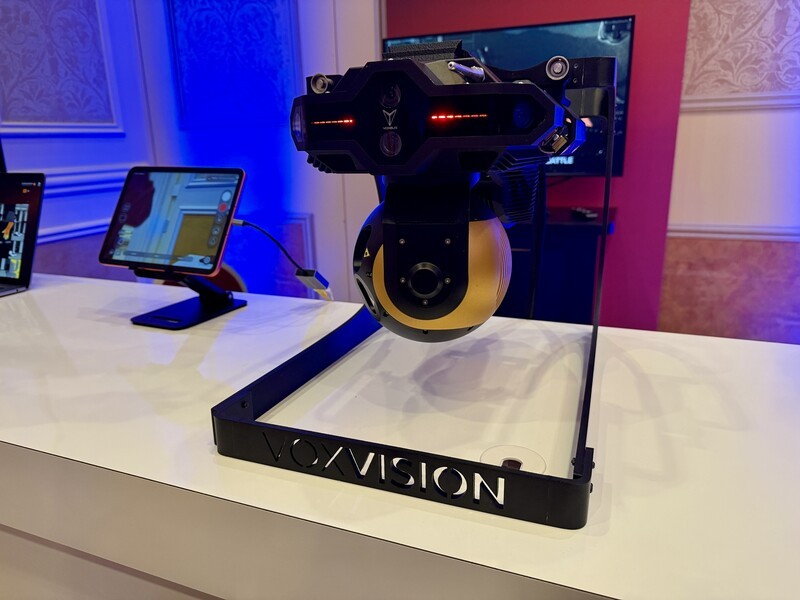
When it comes to fighting wildfires, every second counts. Helicopters are a key tool in remote Canadian communities for monitoring changing conditions and dumping big buckets of water from the sk to dose flames. But Voxelis is changing even basic helicopters into a high-tech firefighting tool to create a data cloud, well…in the clouds!
Based in British Columbia, Voxelis has developed a platform called VoxVision. It's kind of like having a digital AI crewmember for helicopter pilots. Having a technician on board every helicopter involved in a fire fight is just not doable since equipment is specialized, sometimes bulky, and there's only so many trained analysts and technicians.
Voxelis came up with a solution.
How it works:
- Thermal Scanning: The AI can perform real-time thermal scans to find hot spots that the human eye (even a pilot's) might miss through thick smoke.
- Mapping and Prediction: It uses computer vision to map fire perimeters and even predict fire behavior, helping crews choose the best attack techniques.
- Safety First: It provides obstacle warnings to pilots, which is a huge deal when you're flying in low-visibility, high-stress environments.
By putting out fires faster, Voxelis estimates we can significantly reduce the massive CO2 emissions caused by every square kilometer of burning forest. This is tech that could have life-saving results for people in remote areas and firefighters risking their safey to battle a blaze.
2. Acrylic Robotics: The Robot That Actually Paints
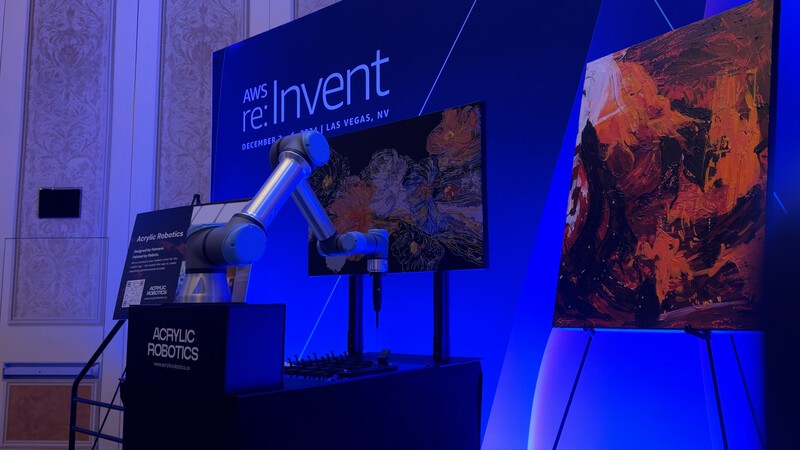
This is the one that for sure is going to make people dig in. AI and Art? Go away! AI doesn't have a place in everything humans do, so leave art alone, right?
At least that was my initial reaction before I went on a briefing to learn about a Canadian company called Acrylic Robotics. I thought we were looking at a classy AI image generator for art snobs. What I learned actually made me change my position (slightly with very specific caveats) of how there actually could be a place for AI to exist alongside art.
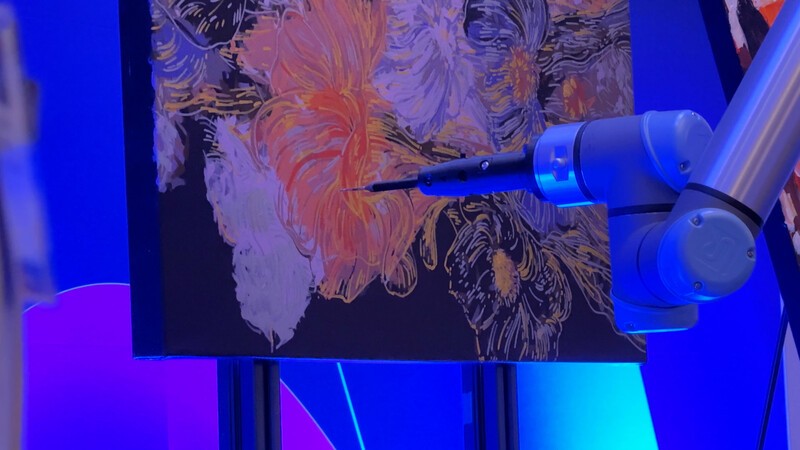
Founded by visual artist and mechanical engineer Chloë Ryan, this Montreal-based startup uses AI to capture the "soul" of a painting. It uses robots to make physical brush strokes on actual canvas using real paint as trained by real artists.
Why this is a game-changer:
- Precision Brushstrokes: Their robotic arm doesn't just "print," it replicates the exact pressure, speed, and texture of the human artist's hand who trained it.
- Why Not Just The Real Deal: The company highlighted an example of a prolific artist with a debilitating disease that was stealing their ability to create art with their hands. This artist trained the robot to learn their style so they could continue to create art, even when thier own hand could no longer hold the brush.
- Fighting Art Fraud: This is where it gets really "detective movie" cool. They've partnered with the Norval Morrisseau estate to use AI to analyze brushstroke patterns and identify fakes.

Also, there's a whole scene in the artwork that makes it difficult for artists in Canada to make a living. By allowing artists to create limited editions of their work that are actual paintings, this makes "fine art" more reachable for everyday buyers and gives the artists a chance to actually earn enough from their art to live off of their art. It's not about replacing artists; it's about giving them a high-tech studio assistant that never gets tired.
3. MLSE & The Toronto Raptors: The AI "Shooting Lab"

If you've watched a Raptors game lately, you know the level of athleticism is off the charts. But behind the scenes, the team is using some of the most advanced AI in sports to find an edge.
Working with Amazon Web Services (AWS), MLSE (the parent company of the Raptors and Maple Leafs) has built what they call the Shooting Lab.

The High-Tech Assist:
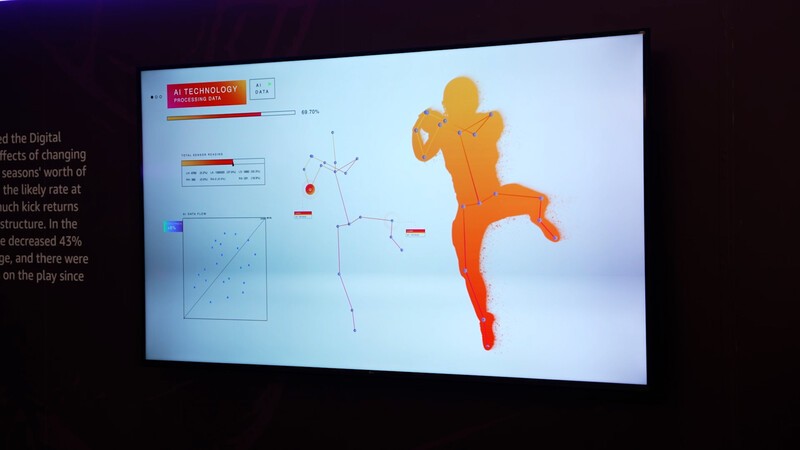
- The Shooting Lab: Using a massive array of cameras, the AI tracks 29 different points on a player's body 60 times per second. It analyzes things like your elbow velocity, release angle, and even how wide your stance is.
- Instant Feedback: Coaches can use this data to spot mechanical flaws that are impossible to see with the naked eye.
- Video Magic: On the media side, MLSE is using AI from a company called Twelve Labs to find highlights. Instead of a person spending 16 hours searching for a specific play, an editor can just type "dunk after a steal" and find the clip in seconds for replay during a game or for highlight reels to share afterward.
I actually got to try the Shooting Lab on the Raptors' home court! Seeing a visual map of my (admittedly mediocre, but quite valiant) jump shot compared to a pro's was eye-opening.
AI In Canada
AI has really become synonymous with chatbots and generating images of 6-7 fingered hands, giving it a (sometimes rightfully earned) bad reputation.
For a quick summary of 20 years worth of AI innovations since the start of the cloud check out this article here!
But it's worth remembering AI tools, especially in the hands of clever Canadians, can do some pretty incredible and meaningful things. We just need the right minds, with the right tools and vision to explore what's possible.
The examples in this article are just a few cool examples I've seen in recent months of how Canadian companies are quietly finding uses for AI tools that no one else in the world has thought of.
The Cloud and AI together haven't just changed how we watch the movies we love, but also how they're made.
From to protect our forests, preserve our cultural art history, and help our favorite sports teams perform at their absolute peak.
It's pretty exciting to see Canadian companies leading the charge in ways that are actually practical and, frankly, just plain cool.
Read more

How AI is Changing Basketball (It’s Not What You Think)
AWS, the cloud based systems that are powering some of the coolest AI technologies in the world, are being embraced by sports leagues around the world. Recently, I got a firsthand look at how advanced AI is being used in basketball to help players and coaches and change the game-watching experience for super fans.

I Let Alexa+ Plan My Family Trip: Here’s What Actually Worked
Alexa+ does a lot more than turning off your lights or checking your doorbell. I decided to put this virtual assistant to the test of planning a cross-border road trip for my family. It did a shockingly great job!

Forget Gut Feeling: This Tech Tracks UFC Athletes' Hormones During Training
Do AI and sports mix? As technologies involve and even the slightest edge can mean the difference between a win and a loss, pro athletes are looking for every advantage they can find, including AI. This is how
Artificial Intelligence
The world of AI is huge and changing our world. Here's some of the ways it's doing that.