
We may earn a commission for purchases using our links. Learn more.
Disclosure: Roborock is an advertising partner of Media Sleuth Inc., the parent company of geekingout.ca. They did not receive editorial input for this article.
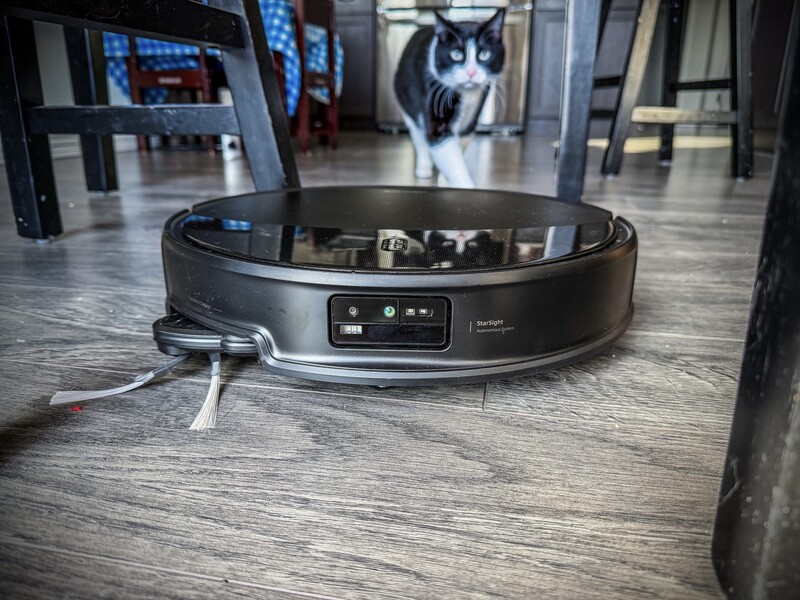
Only Canadians know the specific brand of chaos that arrives every spring. It's that glorious (and gross) time of year when the snow finally starts to melt, but instead of lush green grass, we're left with a landscape of soup-like mud.
Thanks to our weird Canadian temperature swings in spring 2026, we're wearing heavy winter boots in the morning to avoid slipping on the overnight ice, and by the afternoon, we're switching to rainboots to navigate the puddles.
All that dirt, dust, and "slush-residue" gets tracked directly onto the hard floors in our home.
Add two shedding cats into the mix (with their floating flurries of fur) and two active toddlers who treat every snack like a confetti cannon, and you have a recipe for a cleaning nightmare.

During this disproportinate gross time for keeping up with household cleaning I've been putting the Roborock Saros 20 through its paces over the course of about four weeks. The goal was to see if it could help me gain back something I had truly just given up on since our twin toddlers could walk: keeping up with basic house cleaning. With a premium price tag, my expectations were (possibly unreasonably) high and I'm shocked to say, this vacuum/mop combo delivered so totally beyond expectations, I'm actually not ashamed when last-minute visitors drop by.
Roborock Saros 20 One Paragraph Review
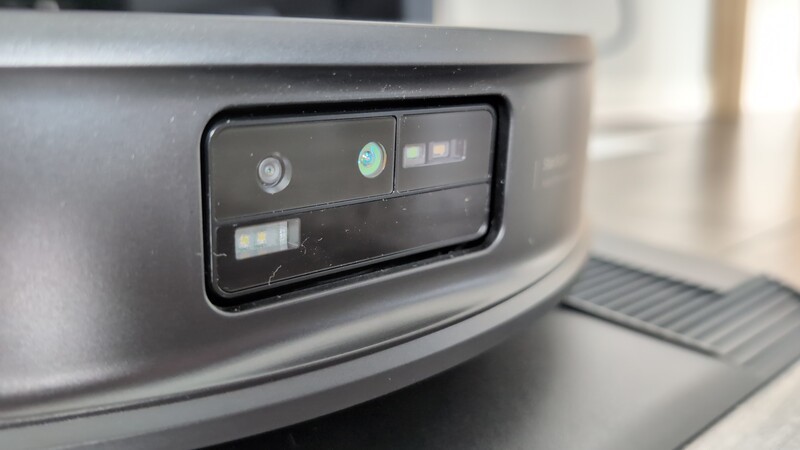
This robot vacuum and mop is thoughtfully designed to be a "set it and forget it" device. Its slim design means it can get into the areas other vacuums tend to miss, and its integrated technology allows it to slide its mop pads in and out to truly get into corners and, most impressive of all, to actually lift its body up to avoid obstacles…no more robots needing rescue.
Pros
- Ultra-slim design (fits under almost everything)
- AdaptiLift (stops the robot from getting stuck on rugs or door stoppers)
- 100°C hot water wash (ensures mops are sanitized)
- 40% faster charging (less downtime)
- FlexiArm technology (gets into corners other robots miss)
Cons
- Premium pricing (though, you get what you pay for)
- App can be deep (settings might be overwhelming for some)
- Power cable colour (white) doesn't match base unit (black)
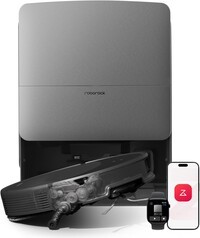
Roborock Saros 20
Roborock's Saros 20 is an ultra-slim vacuum and mop that gives you effortless edge-to-edge cleaning. What really makes the Saros 20 special is its AdaptiLift Chassis 3.0, which allows it to lift itself up over obstacles or thresholds between rooms, so it can continue cleaning without losing suction.
The setup experience: Refreshingly simple
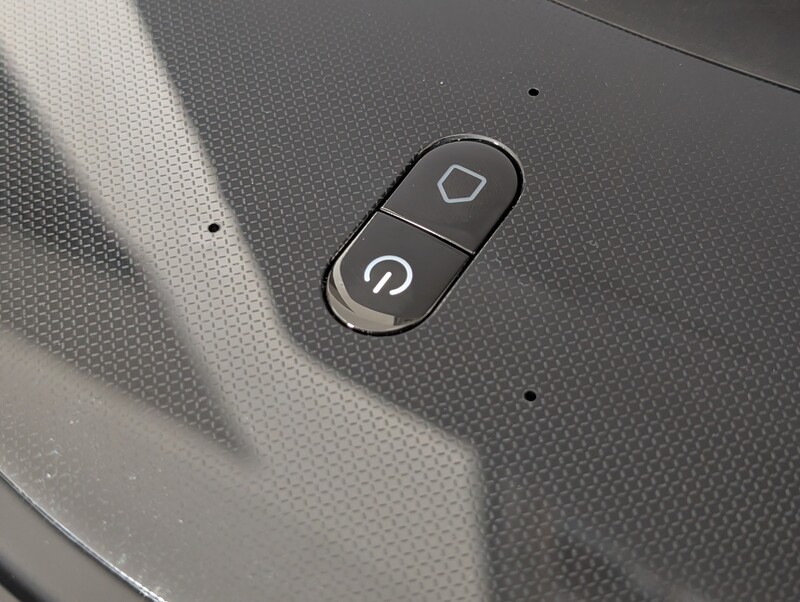
Usually, when a piece of tech is described as a "flagship" or "ultra-premium," I mentally psych myself up a full afternoon of inputting Wi-Fi passwords, downloading firmware updates, and complicated assembly, and, in the case of vaccuums and mops, accompanying them as they slowly patrol and map the house.
With the Saros 20, the whole setup experience was refreshingly simple.
Getting the dock ready for action was intuitive. I snapped the magnetic mop pads into place (they click in with a satisfying snap), filled the clean water tank, and the app found the unit almost instantly. You'll have to be a bit patient, because you'll need to allot time for the unit to fully charge up, but once that's done you're set to start introducing this robot to your home.
The Saros 20 has a new charging design that is 40 per cent faster than the previous model. It packs a beefy 6,400 mAh battery, and seeing it top up so quickly meant I could get to that first "mapping run" of my house much sooner than I expected.
The mapping was quicker and smarter than your average robot thanks to the on-board visual smarts (more on this later). But if you're upgrading from an old Roomba, just know mapping a home isn't the clumsy bumping experience you may be used to.
Low-clearance navigation: No more dust bunnies under the couch
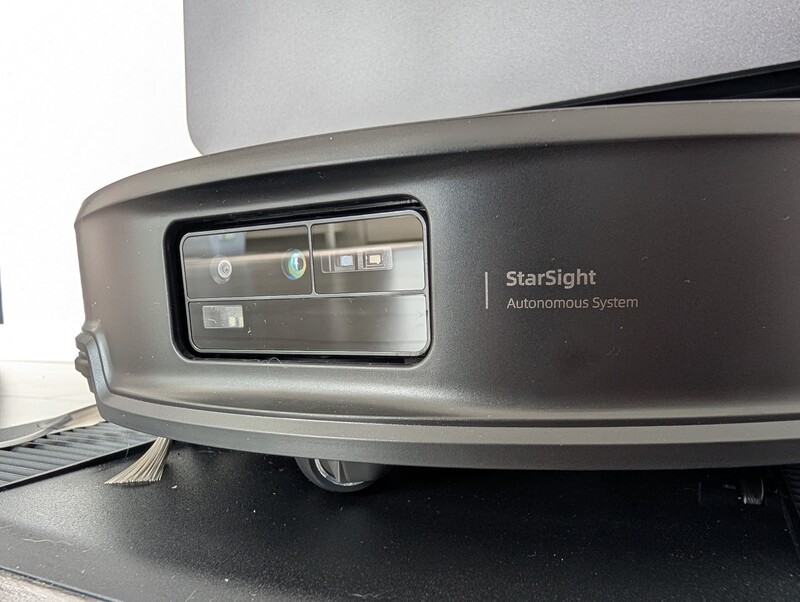
One of the most immediate "wow" factors of the Saros 20 is its low-profile design. Most high-end robot vacuums are getting taller as they pack in more sensors, often resulting in a "hump" on top that gets snagged on the bottom of a sofa.
Roborock went the other way.
This thing has an ultra-slim profile of just 3.14 inches. Thanks to some clever engineering with their StarSight 2.0 sensors, it can actually squeeze down to 3.13 inches with its flexible front housing.
In my home, this was quite entertaining to watch. Our couch and side tables all sit quite low to the ground. And with testing other vacuums, I just accepted the fact that those will never be cleaned underneath unless I do it myslef and hope the cat hair and dust don't collect and mutate too aggressively in the meantime.
The Saros 20 glided under furniture effortlessly.
Knowing that the hidden cat dander lurking under furniture is being sucked up by the massive 36,000 Pa of HyperForce suction provided a level of peace I didn't know I needed because not only is it cleaning the parts of the floor we trample every day, it's also cleaning the parts you've been ignoring for months. After it's done a pass of a room, you have the immense satisfaction that the space actually feels clean.
AdaptiLift magic means it (almost) never gets stuck
If you've owned a robot vacuum before, you are likely very familiar with the "cry for help" notification. You're at work, or in the middle of making dinner, and your vacuum gets stuck on a thick rug, a transition strip, or a random obstacle your toddler tossed on the floor. It sits there, chirping sadly, draining its battery, while it waits for you to come and "save" it.
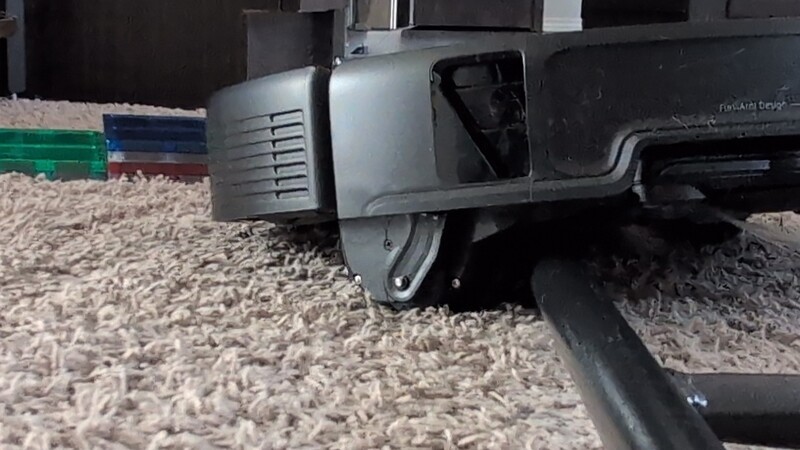
The Saros 20 tackles this head-on with its AdaptiLift Chassis 3.0, a specialized suspension system that allows the unit to lift its entire body to clear obstacles up to 3.14 inches high.
In my testing, I watched it approach the transition from my plank flooring to a thick, plush carpeted area in the living room. A lot of robots would bump into that "lip" and turn around, thinking it's a wall. The Saros 20 simply hoisted its chassis up and carried on without any issue.
The real "Pro" moment came when it encountered a door stopper by our front door. Usually, a robot would get its front wheel wedged and give up.
Instead, the AdaptiLift activated, the robot lifted itself up, got unstuck within seconds, and went right back to work.
The same thing happened when my wife's slippers got lodged underneath the unit (thanks, I am guessing, to one or both of our toddlers trying to feed the robot). It was sitting half-on and half-off of the slippers, trying to navigate its way out.
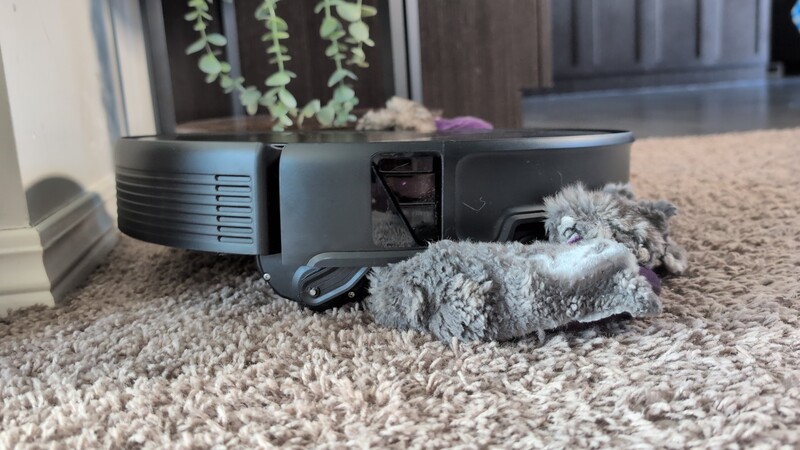
When it couldn't find a clear path, it lifted itself up, cleared itself of the obstacle, and carried on cleaning.
I spent way too long testing this feature and used my kids magnetic tiles to try and design traps for it (don't judge, this was fun). It was actually super difficult to create environments where I could get photos and videos of the robot failing to clear my Home-Alone-Style traps because it seemd like it learned each time what I was up to and was a step ahead in thwarting movie.
It's genuinely impressive to watch the machine "think" its way over a barrier rather than just slamming into it repeatedly.
Mopping that actually...well, mops
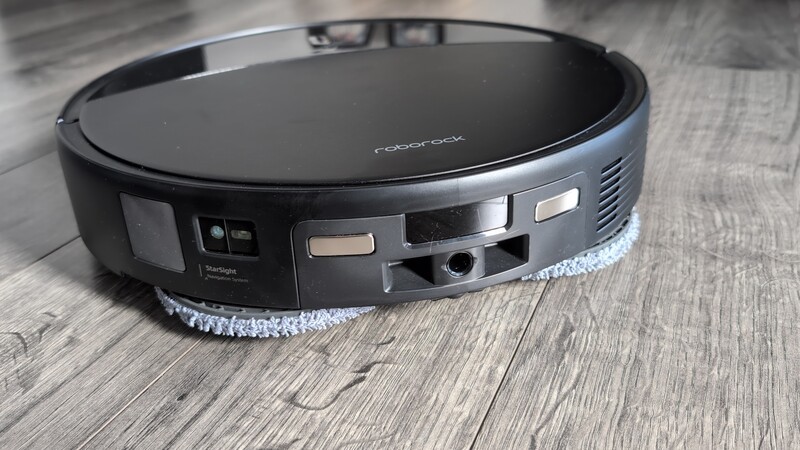
Most robot "mops" are fine for a light dust, but they don't do much for nitty gritty dirt stains. The Saros 20 is different. It uses a VibraRise 5.0 system with dual rotating pads that spin at high speeds while applying adjustable downward pressure.
This is crucial for those dried-on mud tracks from the kids' boots. In the app, you can actually tell it to apply more pressure for tougher areas, so instead of just wiping the surface with the mop pads, it actually scrubs it.
But the real "magic" moment happened in the kitchen, as it made its way along the cabinetry and baseboards. This is where Roborock's FlexiArm Technology shines. I stood there, eyes wide, as the mop pads automatically slid outward, adjusting their placement to get right into the corners and under the "toe-kick" areas of the cabinets.
It was the robot equivalent of somebody reaching into the corner and scrubbing it clean with a sponge. Again, this is an area that, based on previous robot mop and vacuum experience, I acknowledge isn't something that will ever truly be clean until I do it myself, and yet this robot could ACTUALLY clean it.
Roborock claims 100% edge coverage, and based on the lack of dirt after it was done cleaning, that seems to track (pun intended).
The RockDock rocks a maintenance-free clean
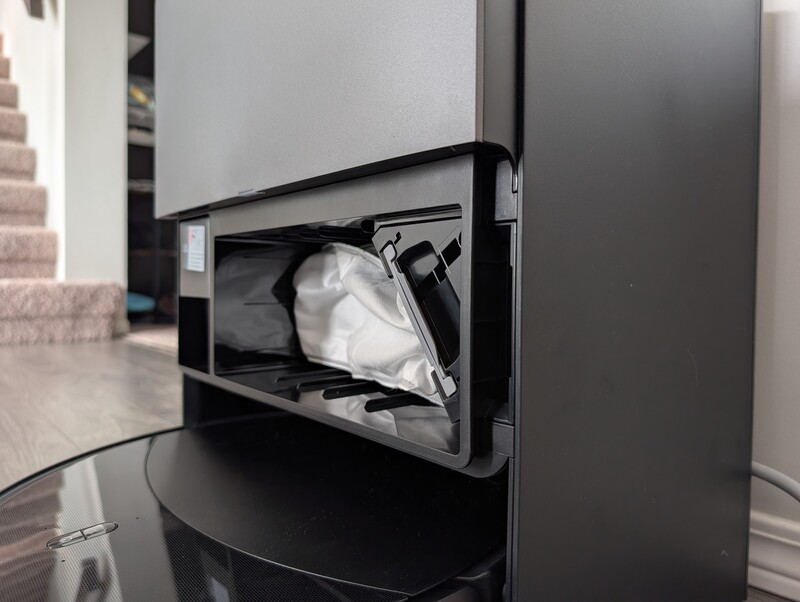
The most significant upgrade for anyone who values their time is the Brand New RockDock. The charging stand was thoughtfully designed to keep the vacuum, mop, and your house from smelling like an old gym bag.
When the Saros 20 finishes its job, it returns to the dock for an automatic, hands-free cleaning that includes:
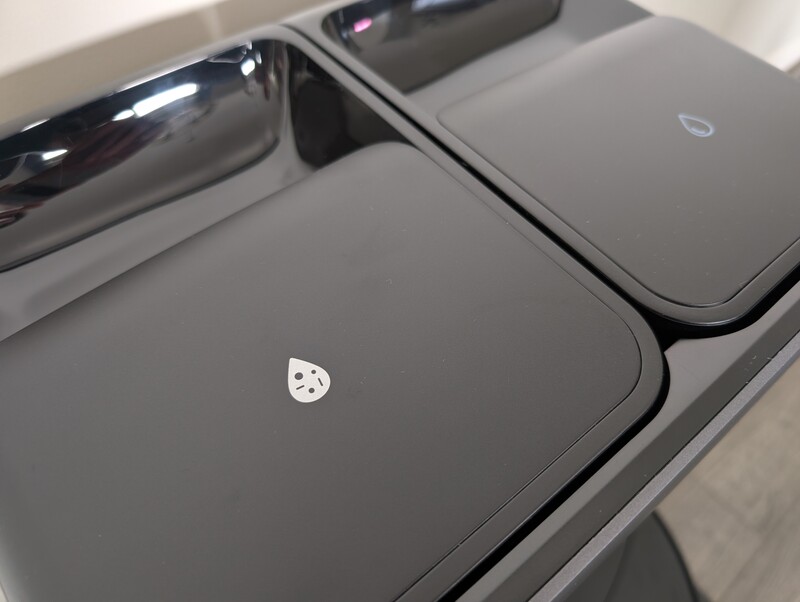
- 100°C Hot Water Washing: This is huge. The dock washes the mop pads with piping-hot water. This gets the dirt out, but, more importantly, it kills bacteria and dissolves the oils, grit, and grime that cold water simply can't touch.
- Automatic Drying: After the wash, the RockDock uses heated air to dry the pads and the dock base. This is the only way to prevent that pungent mop smell or mold growth that plagues cheaper units…you know, that sickening smell that sours your senses the second it hits your nostrils? No more.
- Auto-Emptying: It sucks all the cat hair and toddler crumbs into a sealed dust bag that's supposed to last for up to 65 days. In a house with two kids frequently chasing two cats who also chase each other around when they get the zoomies, I'm guessing I'll get about 45 to 50 days, but that's still nearly two months of never having to touch a dustbin.
- Self-Cleaning Dock: The dock even cleans its own base, so you don't end up with a sludge build-up where the robot parks.
Real-world performance
No matter how often you clean, as a parent, one of the biggest pitfalls is the continual "snack trail." My toddlers treat every granola bar, piece of toast, or cracker like a science experiment in crumb distribution. Usually, we have to pull out the vacuum multiple times a day.
With the Saros 20, I just set a schedule. It handles the flurry of fur from the cats and the crumb-fest from the kids without breaking a sweat. Because the suction is so high (that 36,000 Pa number is no joke), it actually pulls dirt out from the gaps in my floorboards—places other vacuums tend to miss.
And because it's so quiet in its standard mode, our cats actually aren't scared of it. They mostly just watch it from the safety of their perch on the sofa while it cleans up after them.
Verdict: Is it Worth it?
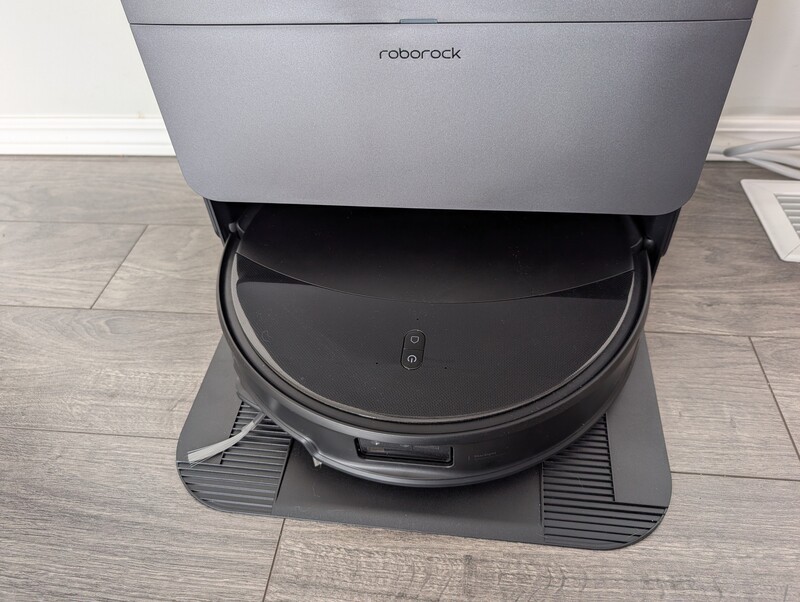
The Roborock Saros 20 is a premium machine, and it comes with a premium price tag. But you have to look at what you're getting: a device that genuinely saves you hours of manual labour every week.
Roborock Saros 20
The pain points of robotic vacuums and mops of the past are eliminated with the Roborock Saros 20. Beyond the above mentioned features, this device has an Adaptlift Chassis that can raise the robot 3.46 inches in height to clear thresholds between rooms.
In the context of a Canadian home, where we deal with salt, mud, pet hair, and the chaotic debris of family life, the Saros 20 feels like it was built for the challenge. Its ability to navigate under low furniture, lift itself over tricky thresholds, and deep-clean its own mopping pads with 100°C water makes it a standout in a crowded market.
If you're tired of having to keep an eye on your robot vacuum and want something that can actually handle the deep-seated dirt of a busy, multi-pet, multi-kid home, the Saros 20 is the gold standard for 2026.
It's efficient, it's powerful, and, most importantly, it actually works.
What do you think of the Saros 20? Would you welcome this robot vacuum and mop into your home? Let me by reaching out on Instagram
Read more

Apple’s Smart Home Evolution Is Finally Here
Apple introduced HomeView, Apple TV 4K, and HomePod mini 2, expanding its smart home lineup with conversational Siri AI, facial recognition, hands-free media controls, and hardware-level privacy protections

Must-Have Accessories for your VITURE Smartglasses
A collection of accessories to enhance the VITURE smart glasses user experience.
Tech and Gadgets
Smartphones, smart home, smart cars...well anything that's smart and a gadget, you'll find it here.
How an E Wagon Can be a Game-Changer for Busy Families
Kids come with LOTS of stuff. From toys, to sports equipment to picnic lunches (and everything in between), hauling around kids means hauling around their stuff. Regular utility wagons are great at this. But the Litheli E Wagon is even better!